DIPG is a rare childhood brain tumor. Learn about the condition, treatments, and research.
What is DIPG/DMG?
Under the 2021 WHO classification, DIPG is now classified as a type of diffuse midline glioma (DMG), H3 K27-altered. About 80-85% of DIPG tumors carry this specific genetic mutation. You may hear doctors use either term. DIPG refers to the tumor’s location in the pons (brainstem), while DMG is the broader molecular classification. Both describe the same devastating disease
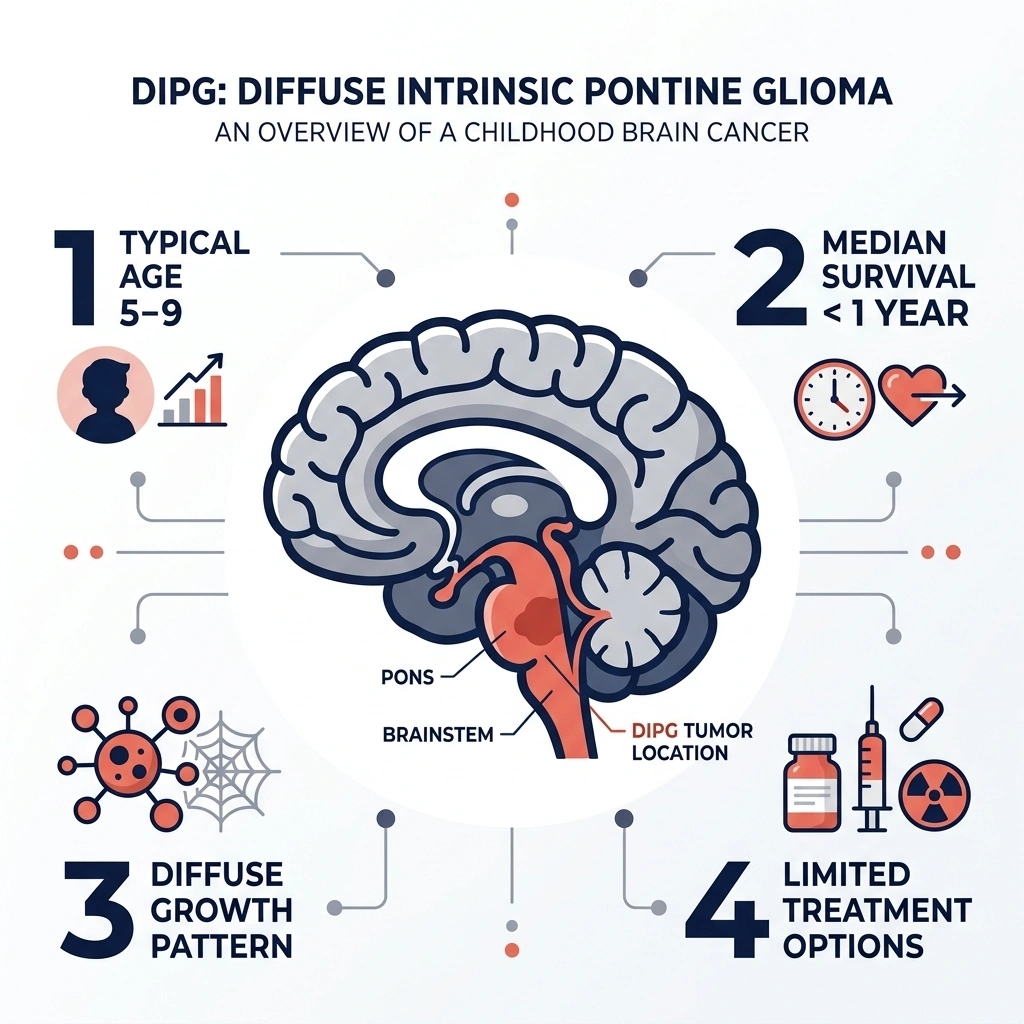
DIPG primarily affects children between the ages of 5 and 10, with a median age at diagnosis of 6-7 years. It affects boys and girls equally. About 300 children in the United States are diagnosed each year. There are no known risk factors or ways to prevent it.
FACTS
300
About 300 children in the U.S. are diagnosed with DIPG each year.
8-11
Months
The average survival from diagnosis is 8-11 months
50+
Years
DIPG’s survival rate has remained essentially unchanged for over 50 years
#1
DIPG causes nearly half of all pediatric brain tumor deaths
Key Characteristics

the Signs
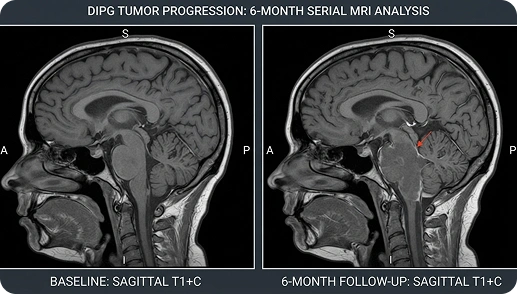
The brainstem controls breathing, heartbeat, balance, and movement.
Treatment Challenges
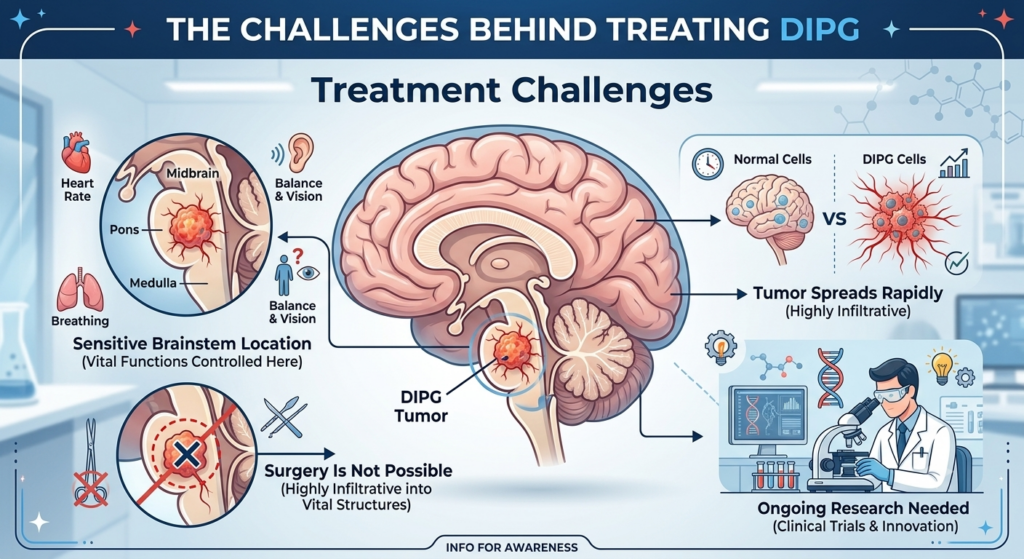
DIPG develops in one of the most sensitive areas of the brain, making treatment extremely challenging. Its aggressive nature and limited treatment options continue to make research and clinical trials critically important.
Treatment Approaches
DIPG has no cure. Every current treatment is palliative, able to relieve symptoms and extend time but not to save a child’s life. Research is the only thing that changes that.
The only standard of care. Temporarily improves symptoms in about 80% of children but is not a cure. Extends survival by approximately 3 months on average.
Not possible. DIPG grows diffusely throughout the brainstem (pons), making surgical removal impossible. Biopsy may be performed for molecular profiling.
Has not been shown to improve survival and is not standard of care.
The best hope for progress. New approaches include immunotherapy, targeted therapies, and direct drug delivery (CED)
The Funding Gap
About 8% of the U.S. National Cancer Institute budget goes to all pediatric cancers combined.DIPG, as one of many pediatric cancer subtypes, receives only a fraction of that. Progress depends on private philanthropy and family foundations like ours.
Fewer than 8% of the federal government's cancer-research budget goes to childhood cancer. (Source: American Cancer Society Cancer Action Network.)